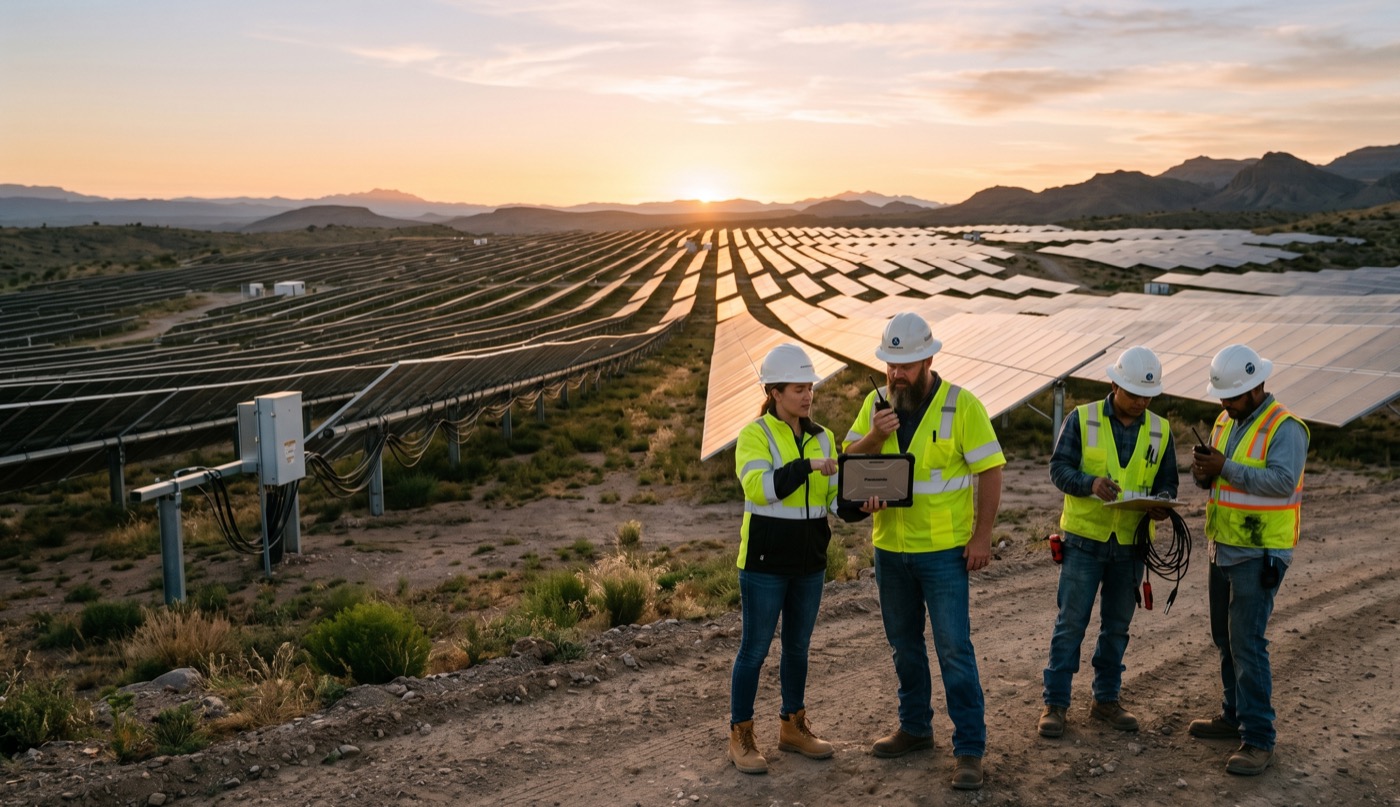
From Solar EPC to Energy: Why This Is the Right Proving Ground for AI Agents
In early 2026, I set out to build AI agents for energy operations. The obvious question was where to start. Utilities are massive but slow. Battery storage is growing fast but fragmented. Solar O&M is recurring but lower margin. Solar EPC sat in the middle: high coordination overhead, repeatable workflows, enough margin to justify investment, and a market large enough to matter.
I chose solar EPC as the beachhead. Not because it is the flashiest part of energy, but because it is the best proving ground for agent systems. Here is why.
First, the workflows are standardized. Every solar EPC project goes through the same phases: permitting, procurement, construction, inspection, interconnection, and closeout. The documents are similar. The stakeholders are similar. The bottlenecks are similar. This standardization makes it possible to build agents that generalize across projects.
Second, the coordination overhead is extreme. A 15-project EPC spends an estimated 23 hours per week on permit follow-up, document intake, and subcontractor communication. That is a massive, measurable pain point. And it is almost entirely pattern-matching — exactly what LLMs are good at.
Third, the data is accessible. Permits live in emails. Crew check-ins come by text. Project status is tracked in spreadsheets or simple databases. There is no need to integrate with legacy ERP systems or fight through procurement to get API access. The agents can start working with the tools the company already uses.
Fourth, the market is large and underserved. There are thousands of solar EPCs in the U.S. alone, ranging from local installers to national developers. Most of them do not have dedicated operations software. They run on a mix of email, spreadsheets, and grit. That gap is the opportunity.
How the pattern extends. Once the agent system works in solar EPC, the same architecture applies to adjacent verticals:
- Solar O&M: Work order triage, technician dispatch, and inverter alert parsing. Same inbox-agent pattern, different inputs.
- Utilities: Interconnection queue monitoring, regulatory filing tracking, and landowner coordination. Higher stakes, but the coordination logic is similar.
- BESS / Storage: Utility communication parsing, commissioning schedule tracking, and warranty document management.
- IPP Developers: Portfolio-level milestone tracking, vendor deliverable management, and investor reporting.
The core insight is that energy operations are coordination-heavy across every vertical. The specific documents and stakeholders change, but the underlying pattern — monitor inputs, classify updates, match to projects, log state, notify humans — stays the same.
An honest limitation: Solar EPC is not a perfect proxy for every energy vertical. Utilities have regulatory complexity that solar EPCs do not. Storage projects involve safety-critical systems that demand higher verification standards. The agent system will need adaptation for each market. But the foundational architecture — inbox agents, shared state, and supervisor reporting — is portable.
Want to see this in action? Here's the demo →